Community Insights Reshaping Preflop Strategies in Swedish Online Card Competitions Under National Rules
Riley Wolf · Oct 6, 2026

Community Insights Reshaping Preflop Strategies in Swedish Online Card Competitions Under National Rules
Swedish online card competitions operate under the national licensing framework administered by Spelinspektionen, which sets clear parameters for platform operations, player protections, and promotional structures that directly influence early-stage decision making. Community discussions across specialized forums and data-sharing platforms have begun documenting measurable shifts in preflop ranges as participants adapt to these regulatory boundaries. Data from licensed operators shows increased volume of hand histories shared among verified users since the latest compliance updates took effect earlier in 2026.
Regulatory Framework and Its Direct Effects on Early Decisions
National rules require strict separation between promotional incentives and core gameplay mechanics, which removes certain bonus-driven motivations that once encouraged wider starting ranges in other markets. According to figures released by Spelinspektionen, licensed platforms must disclose all incentive terms upfront, leading players to recalculate expected value calculations before the first cards are dealt. Observers note that these transparency requirements have prompted groups of regular participants to compile shared spreadsheets tracking how different deposit structures alter break-even points for speculative holdings.
Those monitoring participation trends report that multi-table formats governed by Swedish licensing show tighter opening frequencies in the first two orbits compared with earlier periods. The rules also cap certain reload mechanics, which removes the cushion that previously supported loose preflop play from shorter stacks. Researchers tracking aggregated data from compliant networks have recorded a consistent rise in fold-to-three-bet percentages during early levels of regulated events throughout the summer and into October 2026.
Role of Player Forums in Distributing Strategic Adjustments
Online communities centered on Swedish-regulated platforms have created dedicated threads where participants upload anonymized hand data and discuss range adjustments that align with current incentive structures. These exchanges allow users to identify patterns such as reduced cold-calling frequencies when rake structures interact with specific blind levels. One study of forum activity conducted by a Nordic research group found that threads focused on preflop strategy received significantly higher engagement after each quarterly compliance report was published.
Participants often cross-reference their own results with aggregated statistics posted by others, creating a feedback loop that accelerates collective refinement of opening charts. This process differs from isolated study because it incorporates real-time observations from multiple stack depths and table sizes permitted under the same license. Evidence collected from these discussions indicates that players are narrowing suited connector ranges in early position while expanding certain suited ace combinations when facing known tight opponents who also follow community-derived charts.
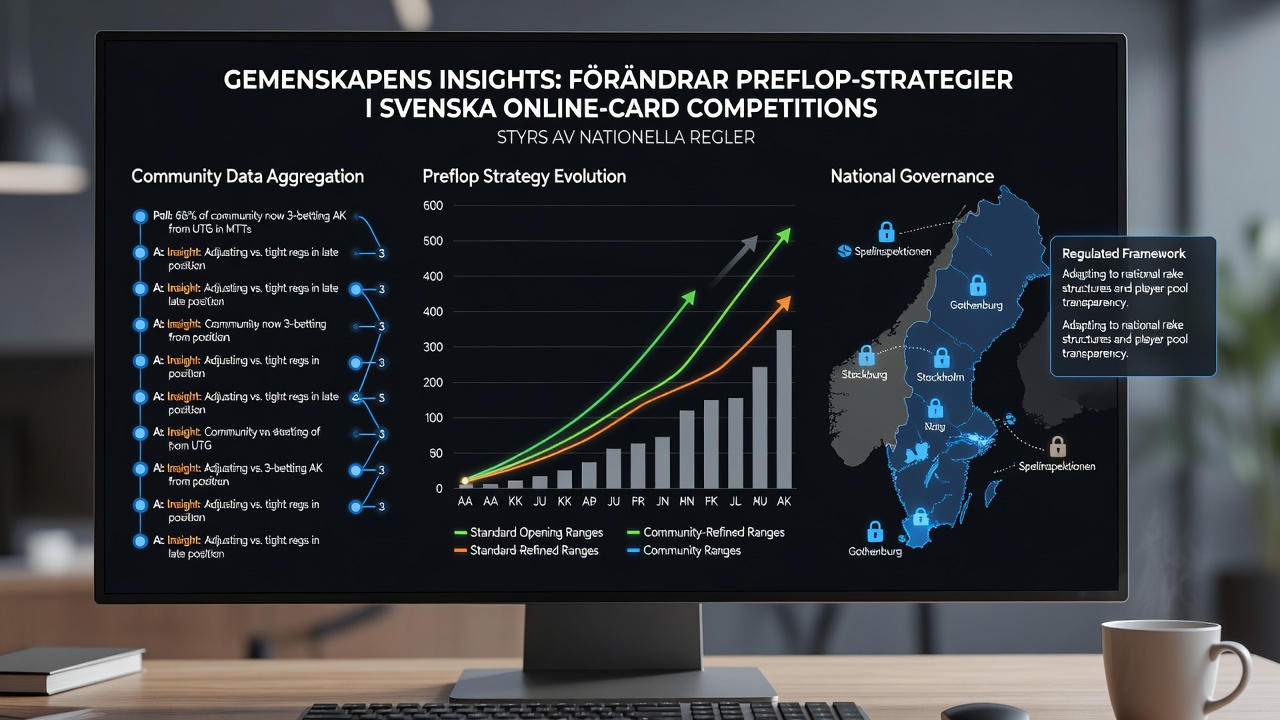
Observed Changes in Starting Hand Selection
Hand history repositories maintained by licensed Swedish operators reveal that the average opening range from under the gun has tightened by several percentage points since community-driven tracking began in earnest. Players cite the interaction between fixed rake caps and limited promotional leverage as the primary driver for folding marginal holdings that previously entered pots at higher frequencies. Data compiled across multiple platforms shows a corresponding increase in three-bet sizing consistency, with fewer small re-raises from late position when community consensus favors larger sizing to deny equity.
Case examples shared in regulated card room discussion groups illustrate how specific starting hand matrices have been revised to account for the absence of certain deposit-match mechanics that once subsidized loose play. Those reviewing thousands of hands note that suited kings and queens see more frequent folds from early seats, while pocket pairs maintain steady inclusion rates because their implied odds remain intact under current payout structures. The shift appears most pronounced among mid-stakes regulars who participate in multiple daily tournaments on platforms approved by the national authority.
Data Sharing Practices and Their Cumulative Impact
Community-maintained databases now include filters that isolate hands played on Swedish-licensed sites, allowing users to isolate the effects of national rules from broader market trends. This granular approach has led to refined equity calculations that incorporate the exact timing of blind increases and payout structures mandated by licensing conditions. Academic papers examining European online card markets have referenced similar community datasets when modeling decision patterns under varying regulatory environments.
Turnout records from October 2026 events indicate sustained participation levels despite the strategic adjustments, suggesting that players view the tighter preflop approaches as sustainable rather than restrictive. Groups continue to refine their shared resources by incorporating new hand samples after each major series concludes, which keeps the collective knowledge base current with any minor rule clarifications issued by Spelinspektionen.
Conclusion
Community-driven analysis has become an established channel through which participants in Swedish online card competitions adapt preflop strategies to align with national regulatory requirements. The combination of transparent platform rules and shared hand data has produced measurable changes in opening frequencies and three-bet patterns that continue to evolve as new compliance updates appear. These developments remain grounded in observable statistics rather than isolated experimentation.