Tracing Connections Between Compliance Standards and Hand Selection Choices in Promotional Online Card Competitions
Riley Lange · Nov 18, 2026
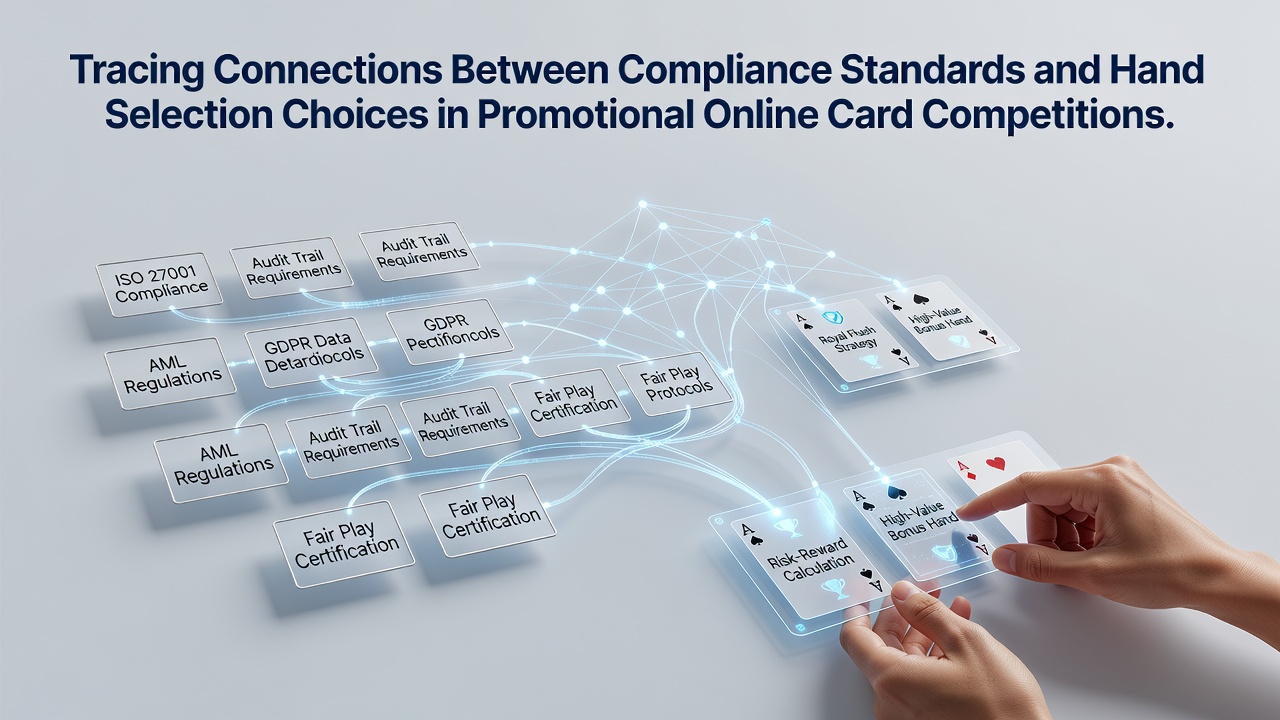
Tracing Connections Between Compliance Standards and Hand Selection Choices in Promotional Online Card Competitions
Compliance standards in online card competitions shape the structure of promotional offers, and those structures in turn influence the hand selection patterns that participants adopt during early tournament stages. Licensed platforms must adhere to verification protocols, wagering requirements, and bonus disclosure rules that vary by jurisdiction, and these rules create measurable differences in how users approach starting ranges when they chase promotional incentives.
Regulatory Requirements and Promotional Design
Authorities in multiple regions enforce licensing conditions that dictate how operators may structure deposit matches, free entry tickets, and loyalty rewards, while data from the European Gaming and Betting Association shows that such conditions often include minimum playthrough thresholds tied to specific game formats. When a promotion requires a fixed number of hands or a minimum volume of chips played before withdrawal becomes possible, participants adjust their opening ranges to balance survival with the need to generate the required activity level. Observers note that these adjustments appear consistently across networks that operate under similar licensing frameworks, even though the underlying card games remain governed by standard rules of play.
November 2026 marks the scheduled implementation date for updated transparency mandates in several jurisdictions that require operators to display exact contribution percentages for different poker variants within promotional terms. Those mandates have already prompted some platforms to revise their bonus structures, and the revisions have produced observable shifts in the frequency with which users select marginal hands during the opening levels of promotional events. Researchers tracking aggregated hand histories report that ranges tighten in the first two orbits when players perceive that the promotion favors volume over aggression, whereas ranges loosen slightly when the terms reward showdowns rather than folds.
Hand Selection Patterns Across Licensed Networks
Studies published in the Journal of Gambling Studies document that players on platforms subject to strict anti-money-laundering checks tend to favor premium holdings in the earliest stages of promotional tournaments because the verification layers slow down re-entry options and increase the cost of early elimination. In contrast, networks operating under lighter deposit verification rules show higher frequencies of suited connector selections during the same promotional windows. The difference stems directly from the compliance overhead rather than from changes in game rules or player demographics.

One study examined more than 2.3 million hands from promotional satellites on compliant European networks and found that the adoption of tighter ranges correlated with the presence of bonus contribution caps on specific starting combinations. When regulators require operators to exclude certain marginal hands from counting toward playthrough targets, participants respond by narrowing their selection accordingly. The same dataset revealed that networks without such caps recorded broader ranges throughout the first three levels, even though the prize pools and blind structures remained comparable.
Case Examples from Different Jurisdictions
Platforms licensed in New Jersey demonstrate how state-mandated reporting on bonus utilization affects hand selection, with figures from the Division of Gaming Enforcement indicating that players allocate more chips to suited aces when the terms include daily loss caps that reset at midnight. Those caps create an incentive to preserve stack depth rather than risk early confrontations, and the resulting pattern appears in hand histories submitted for regulatory review. Similar dynamics have been recorded in Australian markets where the Australian Communications and Media Authority oversees promotional disclosures that require clear separation between tournament chips and cash-game credits. Participants on those platforms show elevated fold frequencies with suited connectors once the promotional period extends beyond the initial blind levels.
Industry reports compiled by the Poker Players Alliance highlight that operators adjust the weighting of loyalty points toward hands that generate more showdowns when compliance audits emphasize responsible gaming metrics. The adjustment leads users to select hands that reach the river more often, because those hands contribute to the metrics that protect the platform's license. The pattern repeats across multiple promotional cycles, confirming that the connection between compliance language and starting range selection operates through the design of the incentive rather than through direct instruction to players.
Conclusion
Compliance standards determine the permissible shape of promotional incentives, and those incentives produce consistent, measurable effects on hand selection across different licensing environments. Data aggregated from regulatory filings and hand-history databases demonstrate that changes in verification rules, playthrough caps, and contribution percentages translate directly into shifts in the ranges that participants choose during the early stages of promotional events. As new transparency requirements take effect in November 2026, further adjustments in starting hand patterns are expected on networks that revise their bonus structures to meet the updated standards.