Tracing Loyalty Program Effects on Hand Selection Patterns in State-Sanctioned Digital Poker Sessions
Riley Lange · Nov 17, 2026
Tracing Loyalty Program Effects on Hand Selection Patterns in State-Sanctioned Digital Poker Sessions
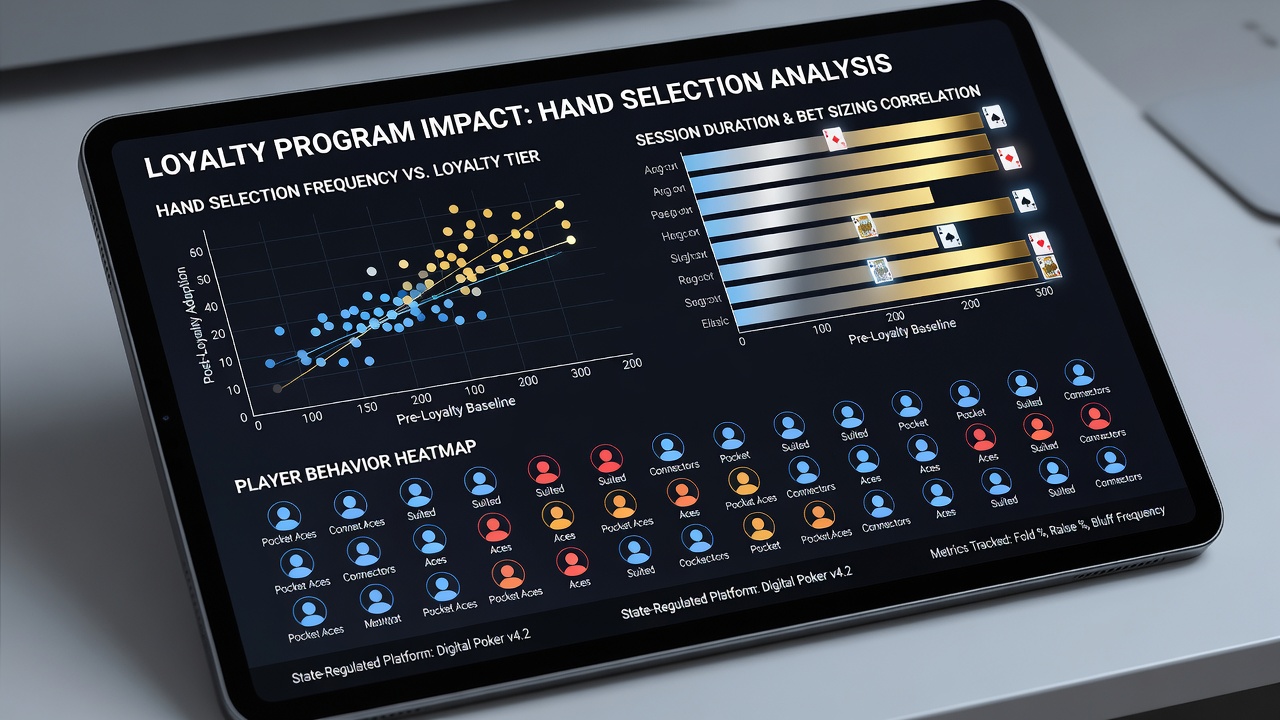
State-sanctioned digital poker platforms have integrated loyalty programs that track player activity through points systems tied directly to hands played and time spent at tables, and these mechanisms influence decisions about which starting hands participants select during sessions. Operators award points based on rake generated or volume of play, with tiered rewards that unlock cashback, tournament entries, or merchandise once thresholds are met. Researchers tracking aggregated data from regulated European and North American networks note shifts in voluntary put-in-pot percentages as users adjust ranges to maximize point accumulation while remaining within compliance frameworks.
Loyalty Mechanics and Session Volume Tracking
Platforms record every hand dealt in state-approved environments, then convert that activity into loyalty metrics that reset monthly or quarterly depending on the jurisdiction. Users receive multiplier bonuses during promotional windows, which encourages broader hand ranges in early positions where premium holdings normally dominate. Data from licensing reports shows average hands per hour rising in mid-stakes cash games when point multipliers activate, particularly in sessions running through late 2026. Analysts compare pre-program baselines against post-implementation figures to isolate the impact on opening ranges across different stake levels.
Observed Shifts in Starting Hand Selection
Hand selection patterns change when loyalty points carry monetary value equivalent to a percentage of rake paid. Players at lower tiers often widen suited connector ranges from the button and cutoff to accelerate point totals, while higher-tier participants tighten early-position selections to preserve bankroll for extended volume. Studies conducted on licensed Nordic and Australian networks reveal a measurable uptick in speculative hand participation during the final weeks of each rewards cycle. Platform logs indicate these adjustments concentrate in cash-game environments rather than tournaments, where structure and blind levels impose different constraints on range construction.

November 2026 data releases from multiple operators highlighted continued correlation between tier advancement and increased limp-call frequencies in micro-stakes pools. Those patterns emerge because point accrual favors sustained participation over selective aggression, prompting users to defend wider ranges against raises when close to the next reward bracket. External validation comes from research published by the Australian Institute of Criminology, which examined behavioral datasets across compliant digital card rooms and documented similar range expansions tied to reward structures.
Regulatory Oversight and Data Transparency Requirements
Licensing bodies mandate that operators disclose how loyalty incentives interact with responsible gambling tools, including session time limits and deposit caps. Compliance teams review hand histories to confirm that point systems do not encourage excessive volume among players flagged for risk indicators. Reports submitted to oversight agencies in Canada and parts of the European Union detail average range adjustments observed in the preceding quarter, allowing regulators to monitor whether loyalty mechanics produce unintended volume spikes. The Canadian Centre for Gaming Research has compiled comparative datasets showing that transparent point structures correlate with more predictable hand-selection behavior across state-sanctioned sites.
Platform algorithms adjust reward multipliers based on player classification, so recreational accounts receive different incentives than those tagged as regulars. This differentiation affects how frequently users defend blinds with marginal holdings or enter multiway pots from late position. Observers examining transaction logs note that point redemption rates peak immediately after monthly resets, when users seek to rebuild progress toward the next tier.
Comparative Analysis Across Jurisdictions
Regulated markets in different regions apply varying formulas for converting play into loyalty value, which produces distinct hand-selection signatures. Markets that tie points strictly to rake paid tend to see tighter ranges overall, whereas those awarding points per hand dealt register wider participation in speculative categories. Cross-border comparisons of anonymized session data from 2025 into 2026 reveal that cash-game players adapt faster to these formulas than tournament participants, whose structures limit opportunities for volume-based accumulation. Analysts continue to monitor whether upcoming regulatory updates scheduled for early 2027 will alter the weighting of loyalty metrics and thereby shift range construction once again.
Conclusion
Loyalty programs embedded in state-sanctioned digital poker environments create measurable feedback loops that alter starting-hand decisions through volume incentives and tier progression. Aggregated platform data and independent research reports document these adjustments across multiple jurisdictions, with patterns becoming most visible near reward cycle endpoints. Continued collection of hand-history statistics will allow regulators and operators to refine program parameters while maintaining compliance with responsible gambling standards.